

01- Flax is in short supply
Flax has strict requirements on the temperature and humidity of the growing environment, suitable for growing in mild and cool, humid, and small temperature difference between day and night, and different growth processes have different requirements for climate and light.
The global flax cultivation area is only about 270,000 hectares, and the flax fiber production is only about 110 tons, accounting for only 4% of the cotton production (about 25 million tons). Flax is in short supply, so similar to silkworm silk, Lyocell fiber and other high-end fabrics, compared to bedding, they are more used in the high-end clothing industry.
02- The process of making flax fiber is complicated
To obtain flax fiber needs to go through screening, raw material pretreatment, pre-degumming, dehydration, alkali leaching, bleaching and other 20 processes, and the processing process of cotton is much simpler than flax, which determines the spinnability of cotton is higher than flax.
03- Linen bedding is expensive to make
The low yield of flax fiber will certainly lead to the result that things are rare and valuable. At present, under the same specifications, the price of pure linen fabric per meter is between 50-200 yuan, and the cost price of making bedding is about 5-10 times that of ordinary cotton fibers, and ordinary families in China generally pursue cost-effective performance, so the popularity rate is far less than pure cotton.
04- Pure linen bed products wrinkle easily and will shed hair
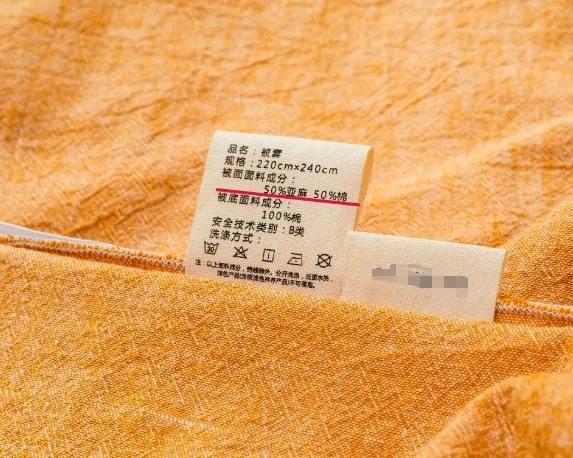
Pure linen fabric is relatively easy to wrinkle, fiber tissue holding force is poor, easy to deform under strength, easy to lose hair, and the touch is not as smooth and comfortable as pure cotton. In order to neutralize the shortcomings of linen fabrics, most of the current market linen bed products are mainly blended, such as cotton and linen blended, polyester and linen blended, silk and linen blended, etc., the proportion of hemp is generally 10-50%.
05- Cotton is the mainstream of the market
When people buy clothes or bedding, they generally ask "is it pure cotton?", often rarely ask "is it linen?", in order to meet market demand, linen is naturally less than cotton, the domestic market for linen application and publicity is also very little, coupled with cotton production is much higher than linen, so cotton is still the mainstream of the market.