



As summer temperatures rise, the demand for cool bedding products is increasing rapidly. These products not only enhance sleep quality but also provide a refreshing relief during hot nights. Market data shows a significant uptick in sales of cool sheets, cool pillows, and cool duvet covers, making them a hot commodity among retailers.
Advancements in technology and consumers' pursuit of a higher quality of life have driven innovation in cool bedding products. Modern cool bedding primarily achieves its cooling effects through three methods: the use of advanced fiber materials like cooling fibers, which have excellent moisture-wicking and heat-dissipating properties; the incorporation of special weaves or fillings, such as cooling gel beads, which give the products a cool-to-the-touch feel; and the design of physical structures like honeycomb patterns that enhance airflow and improve cooling.

Well-known brands such as Japan's Nitori, America's Cool-jams, and China's Luolai and Fuanna have all introduced various cool bedding products. Nitori, for instance, has received widespread praise for its highly effective cooling bedding series, which combines comfort with cooling properties. This summer, Nitori's cool bedding products have seen a sales increase of over 20% compared to last year.
The consumer base for cool bedding products is also expanding. In addition to the traditional home market, industries such as hospitality and elder care are increasingly purchasing these products to enhance guest comfort and satisfaction. Some high-end hotels have even introduced "cool rooms" equipped with a full range of cool bedding products, attracting guests who seek a premium sleep experience.

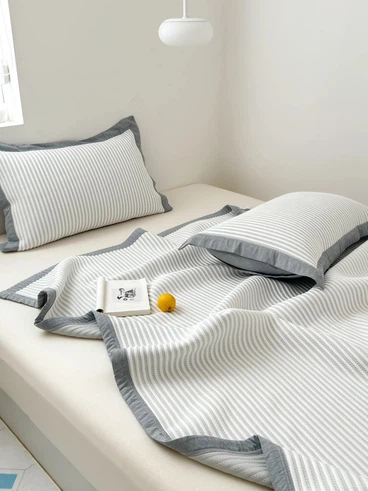
Technological innovations in cool bedding are also progressing. Some companies are developing smart temperature-regulating bedding that uses sensors and intelligent control systems to adjust the bedding's temperature in response to changes in the sleeper's body temperature. Although these smart products are currently priced higher, they are expected to become more widely available in households as technology advances and costs decrease.
However, the rapid growth of the market also presents challenges. The production costs of cool bedding are relatively high, demanding greater technological and manufacturing capabilities from companies. Additionally, the market is flooded with low-cost, subpar products, which can erode consumer trust in cool bedding. Industry experts recommend that companies focus on product quality and brand building, leveraging advanced technology and improved customer service to earn consumer trust.
Overall, with rising temperatures and increasing demand for high-quality sleep, the cool bedding market holds great promise. As technology continues to evolve and the market matures, cool bedding products are likely to become a summer staple for more households, offering consumers a more comfortable sleep experience.